.png?w=700&h=200)

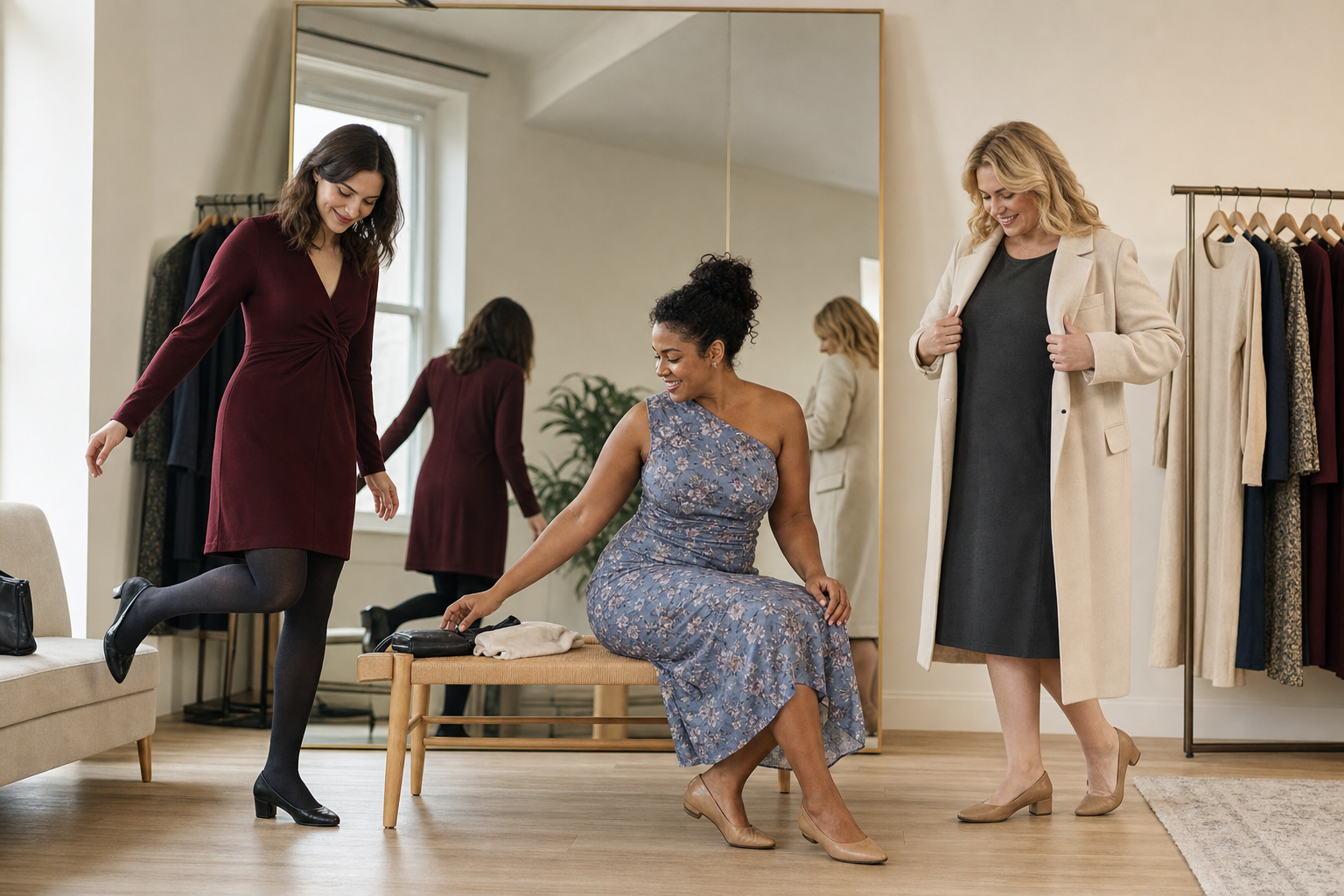
The short answer: a dress fits when the neckline and shoulders stay where intended, the body has enough ease to sit and reach, the hem gives you the coverage you want, and the garment works with your real shoes, underlayers and outerwear. Size is only a starting point. Test the exact dress through movement before deciding.
This guide compares two current My Comfy Dress silhouettes: the Women’s Casual Long Sleeves V Neck Mini Dress and the Floral One-Shoulder Shirred Dress. Product availability, fibre content, measurements and care directions can change, so the live listing and sewn-in label remain the final references.
Dress fit at a glance
| Area | What to check | Warning sign |
|---|---|---|
| Shoulders | Seams or neckline sit in the intended position | Pulling, sliding or repeated adjustment |
| Neckline | Coverage remains comfortable while moving | Gaping or pressure at the neck and armhole |
| Bust and torso | Fabric falls without sharp horizontal strain lines | Buttons, seams or shirring feel stressed |
| Length | Hem works while standing, sitting and reaching | Unwanted riding or restricted steps |
| Layering | Underlayer and coat do not distort the dress | Bunching, sleeve binding or visible lines you dislike |
Start with measurements, not the size name
Measure bust, waist and hip over the undergarments you expect to wear. For length, measure from the shoulder point or another location specified by the store’s chart. Compare your body measurements with the exact product chart; do not assume the same letter size will fit identically across two silhouettes.
If you fall between sizes, consider which body area controls the fit and whether alteration is realistic. A one-shoulder dress depends heavily on neckline placement, while a mini dress decision may be driven by hip ease and hem coverage. “Loose,” “shirred” and “stretch” are not standardized amounts of ease.
The shoulder and neckline test
For a V-neck dress, stand naturally and then reach forward. The neckline should return to its intended position without pulling at the back neck or exposing more than you want. Shoulder seams, when present, should align with the garment’s design rather than droop unevenly.
For the one-shoulder floral dress, raise and lower both arms gently, turn, sit and stand. The asymmetric neckline should feel secure without cutting into the underarm or requiring constant adjustment. Shirring can change how fabric follows the body, but it does not guarantee a suitable fit for every torso.
Run a five-movement fitting-room test
- Walk: take ten normal steps and turn; note hem movement and stride restriction.
- Sit: sit fully in a chair and check waist, hip, neckline and desired coverage.
- Reach: reach forward and overhead as your occasion may require.
- Bend: retrieve a light object using your normal safe movement.
- Layer: add the jacket, coat or underlayer planned for the outfit.
A dress can look correct in a still mirror and still fail during dinner, commuting or dancing. Photograph the front, side and back for your own review if helpful, but judge comfort through motion rather than pose alone.
How to choose dress length
Mini, knee, midi and maxi are relative retail terms, not fixed measurements. Your height, torso length, hip shape and footwear affect where a hem lands. Use the listed garment length and compare it with a dress you already own. Then repeat the sit and reach tests.
For office, ceremony, patio or travel planning, think about seating, stairs, wind, temperature and local dress expectations. Opaque tights, shorts or a slip may provide preferred coverage, but an underlayer should not be used to rescue a dress that restricts movement or feels fundamentally wrong.
Plan the full outfit before the occasion
The long-sleeve V-neck mini dress can be evaluated with tights, a simple base layer and the store’s Women’s Long Hooded Trench Coat. Verify the coat’s current measurements and materials; fleece-lined or winter wording does not by itself establish a temperature rating or weather protection.
For neckline coverage, test a simple layer such as the Women’s Ribbed Rayon Crop Tank Top only when its shape works under the dress. Check that edges remain flat and that added fabric does not pull the outer garment. A layering item described as breathable does not guarantee comfort in every climate.
Fabric claims: read the label carefully
Tags and product titles may mention cotton, breathable or sustainable, but those words should not replace the current fibre-content label and construction details. Cotton percentage matters; blends behave differently. “Breathable” has no single consumer fit measurement, and “sustainable” requires specific evidence about materials and production.
Likewise, ordinary clothing should not be presented as sun-protective unless a verified ultraviolet protection factor or equivalent claim is provided. Use broader sun-safety measures appropriate to the setting rather than assuming coverage equals tested UV protection.
Care without guessing
Read the sewn-in care label before washing. The U.S. Federal Trade Commission explains that garment care instructions address washing or dry cleaning and may also specify drying, bleaching, ironing and warnings. Instructions should reflect the complete garment, including trims and linings.
- Close fasteners and inspect embellishments before cleaning.
- Treat stains promptly using a method permitted by the label.
- Wash with compatible colours when directed.
- Use only the drying and ironing method stated on the garment.
- Store clean and fully dry; use a supportive hanger only when it will not stretch the shoulders.
Canada’s Office of Consumer Affairs provides a reference for common apparel care symbols. When a symbol is unfamiliar, look it up rather than improvising. If the product page and sewn-in label differ, pause and ask the retailer before cleaning.
Frequently asked questions
Should a dress feel tight when new?
It should not cause pain, numbness, restricted breathing or strained seams. Some fabrics relax with wear, but do not depend on an uncomfortable dress changing enough to fit.
How do I know if a mini dress is too short?
There is no universal rule. Decide based on your preferred coverage after walking, sitting, bending and reaching, plus the occasion and underlayers.
How should a one-shoulder dress fit?
The neckline should remain intentionally placed without sharp underarm pressure, gaping or constant adjustment during ordinary movement.
Can I size up for a looser fit?
Possibly, but check whether the larger size shifts the neckline, armhole and shoulders too much. Compare measurements instead of relying on a general sizing rule.
Does cotton mean a dress is breathable and sustainable?
No. Fibre percentage, weave, weight, finish, lining, fit and production all matter. Treat each claim separately and look for specific evidence.
Bottom line
Choose a dress through motion: verify the chart, check shoulder and neckline placement, sit, reach, walk and layer the full outfit. Select the length and coverage that suit your body and occasion, and care for the exact garment according to its label. A successful fit is one you can wear without constant adjustment.